
Artificial intelligence has moved from the world of science fiction into everyday life.
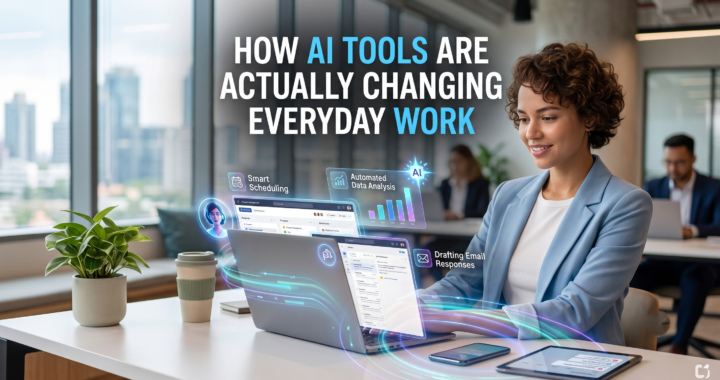
People use AI to search for information, write emails, summarize documents, create images, analyze data, study, and complete tasks that once required hours of work. Businesses are investing heavily in AI, while technology companies continue to race to build more powerful systems.
But something interesting is happening alongside the rapid growth of AI: the more familiar people become with the technology, the more questions they are asking about it.
The conversation is slowly changing from “What can AI do?” to a much more complicated question:
“What should AI be allowed to do?”
AI Is No Longer a Distant Technology
For many people, artificial intelligence is no longer something they only hear about in the news.
According to a 2026 Pew Research Center survey, 36% of U.S. adults say they interact with AI at least several times a day. Nearly all adults surveyed said they had heard at least something about artificial intelligence.
AI is now appearing in search engines, smartphones, workplaces, schools, customer service systems, creative tools, and smart home devices.
This rapid expansion has made AI more useful—but it has also made its risks feel more personal.
People are no longer debating an abstract technology that may arrive someday. They are experiencing it directly.
The More AI Spreads, the More Skeptical People Become
One of the most surprising developments in the AI conversation is that widespread use has not automatically created widespread trust.
Recent research from Pew found that Americans remain deeply skeptical about AI’s impact. More people expect artificial intelligence to have a negative rather than positive effect on society and themselves, while majorities say AI is advancing too quickly and may put personal information at risk.
That concern can be seen in several areas.
People worry about:
- Privacy and how personal information is collected and used
- Misinformation and realistic AI-generated images, videos, and audio
- Jobs and the possibility of automation replacing human workers
- Creativity and whether original human work will be valued less
- Accuracy and the possibility of AI confidently providing incorrect information
- Human connection and the growing role of machines in personal interactions
The result is a complicated relationship with AI. Many people are using the technology while remaining unsure whether they actually trust it.
AI Can Be Useful Without Being Perfect
The growing skepticism does not necessarily mean people want AI to disappear.
For many users, AI is already useful. It can help people organize information, brainstorm ideas, translate text, analyze large amounts of data, and complete routine tasks more quickly.
The problem is that usefulness and trust are not the same thing.
A person can use an AI tool every day and still double-check its answers. A business can use AI to improve productivity while worrying about privacy. A student can use AI as a learning aid while questioning whether relying on it too much could weaken important skills.
This may be one of the defining characteristics of the next stage of the AI era: people are learning to use AI without necessarily believing everything it says.
The Fight Over Human Creativity Is Growing
Another major source of tension involves creative work.
AI can now generate text, images, music, video, and other forms of content in seconds. For creators, this creates both opportunities and serious concerns.
Some artists, writers, photographers, and other professionals see AI as a tool that can help them work faster. Others are concerned about the use of human-created work to train AI systems, the flood of low-quality AI content online, and the possibility that human creativity could become harder to distinguish from machine-generated material.
The debate is no longer simply about whether AI can create something.
It is increasingly about who should receive credit, how the technology was trained, and whether audiences have the right to know how content was produced.
Those questions are becoming especially important in journalism and media, where trust and original reporting are central to the industry. Reuters Editor-in-Chief Alessandra Galloni recently warned about the risks AI poses to journalism while also emphasizing that AI can be useful when combined with strong human oversight and editorial standards.
Younger People Are Not Automatically AI’s Biggest Fans
It might be easy to assume that younger generations are naturally enthusiastic about every new technology.
But the reality is more complicated.
Recent reporting has highlighted growing skepticism among teenagers toward AI-generated content, including concerns about deepfakes, misinformation, job displacement, and the long-term effects of AI on critical thinking and creativity.
This is an important shift.
The people who will likely live with AI for the longest may also be among the people asking the hardest questions about its future.
They are not necessarily rejecting technology altogether. Instead, many appear to be asking whether the rapid adoption of AI is happening faster than society can understand or regulate its consequences.
The Next AI Debate Will Be About Control
The first phase of the AI boom was largely about capability.
Companies wanted to demonstrate what AI could do.
Could it write? Could it create images? Could it analyze data? Could it answer questions? Could it automate tasks?
The next phase may be more focused on control.
Who controls the data?
Who is responsible when an AI system makes a mistake?
How much should people rely on AI?
What happens to workers whose jobs are changed or eliminated?
Should every piece of AI-generated content be clearly labeled?
And perhaps most importantly: how much of everyday life should be handed over to machines?
These questions will not be answered by technology companies alone. Governments, businesses, educators, creators, and ordinary users will all play a role.
AI Is Not Going Away—But the Conversation Is Changing
The artificial intelligence boom is unlikely to disappear.
AI will probably become more integrated into the tools people already use, often in ways that may not always be obvious. Some of the most important AI systems of the future may operate quietly in the background rather than appearing as chatbots or flashy new applications.
But the public mood is changing.
The excitement surrounding AI is now being accompanied by greater caution. People want the benefits of the technology, but many also want transparency, privacy, accountability, and human control.
That may be the real story of the next chapter of artificial intelligence.
The question is no longer simply:
“What can AI do?”
The bigger question is:
“How do we make sure AI serves people instead of the other way around?”