





















Smart home shelves are packed with gadgets promising to make life easier, but not all of them deliver. Here’s a practical starting point for anyone curious about smart home tech without wanting to spend hundreds of dollars figuring out what’s actually useful.
Start With a Hub (Or Skip It Entirely)
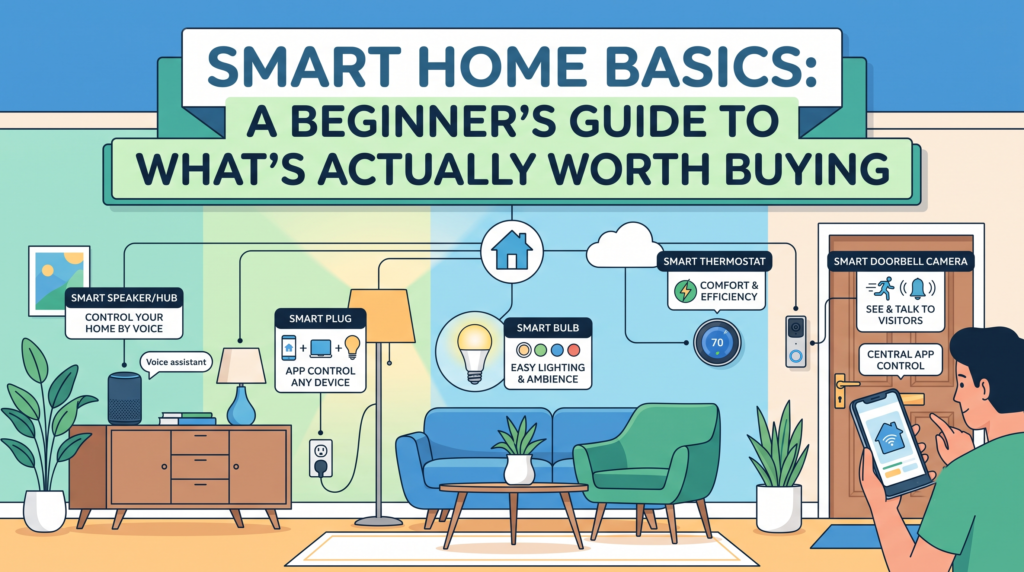
Most modern smart devices connect via Wi-Fi or Bluetooth and work through a phone app, so you often don’t need a dedicated hub anymore. If you already use Alexa, Google Assistant, or Apple HomeKit, that ecosystem can act as your hub. Pick one ecosystem early — mixing brands across different assistants creates unnecessary friction later.
The Genuinely Useful Starting Devices
Smart plugs — Cheap, flexible, and useful for turning “dumb” devices (lamps, fans, coffee makers) into schedulable or remote-controlled ones. This is the best entry point for beginners.
Smart bulbs — Convenient for scheduling and dimming, but skip whole-house bulb replacement upfront. Start with one or two rooms.
Smart speakers — Useful mainly for voice control, timers, and quick information — not a life-changing device on their own, but a solid hub for everything else.
Video doorbells — One of the higher-value smart home purchases for security and package monitoring, especially in areas with package theft.
Where People Overspend
- Smart refrigerators and appliances: Expensive, and the “smart” features rarely get used after the first month.
- Whole-home lighting systems: Cool in theory, but costly to fully outfit and often unnecessary beyond a few key rooms.
- Overlapping ecosystems: Buying devices across Alexa, Google, and HomeKit at once creates compatibility headaches instead of convenience.
Security Basics You Shouldn’t Skip
- Change default passwords on every device immediately.
- Keep devices on a separate Wi-Fi network from your main devices if your router supports it.
- Regularly update device firmware — smart home devices are common entry points for network vulnerabilities if left outdated.
A Reasonable Starter Setup
- One smart speaker as a hub and voice assistant
- Two to three smart plugs for high-use devices
- Smart bulbs in one or two frequently used rooms
- A video doorbell if security is a priority
This covers most of the genuine convenience smart homes offer without the cost or complexity of a full system.
Key Takeaways
- Pick one ecosystem (Alexa, Google, or HomeKit) before buying devices.
- Smart plugs are the best low-cost starting point.
- Skip smart appliances until basics are set up and proven useful.
- Prioritize device security from day one — new passwords, updates, separate network if possible.