
























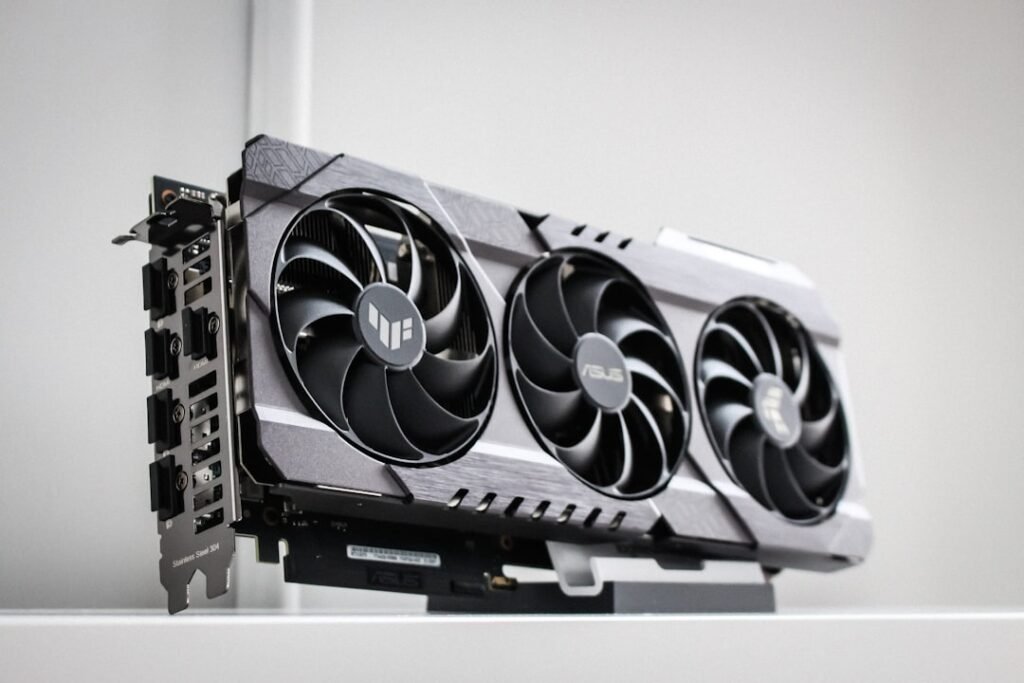

Remember the days when 4GB of video RAM was considered perfectly reasonable for a gaming PC? Well, those days are apparently making a surprise return. In what feels like a blast from the past, ASRock has quietly listed an AMD Radeon RX 9050 equipped with just 4GB of VRAM — marking the first modern GPU to sport that modest memory configuration in quite some time.
So what’s driving this unexpected throwback? The short answer: money. A global shortage of flash memory components, combined with rising RAM prices across the board, has been squeezing both manufacturers and consumers alike. When building a budget-friendly graphics card becomes increasingly expensive, trimming down on memory is one of the most straightforward ways to keep costs in check.
The card itself is built on AMD’s latest RDNA 4 architecture, which is genuinely impressive technology. It features 16 compute units, a 64-bit memory interface, and a boost clock that reaches up to 2,600MHz with 18GBps of memory bandwidth. On paper, the silicon powering it is modern and capable. Interestingly, ASRock also launched an 8GB version of the same RX 9050 on the very same day, giving buyers a direct side-by-side comparison at purchase.
Here’s where things get tricky, though. While the RDNA 4 foundation means you’ll have access to cutting-edge features like AMD’s FSR 4 upscaling technology, 4GB of VRAM has become a real bottleneck in modern gaming. Many of today’s titles — especially those running at 1080p with higher texture settings — routinely push past the 4GB threshold. Gamers who try to run demanding titles may find themselves hitting an invisible wall where performance tanks or visual quality suffers significantly.
That said, for ultra-budget builds, casual gaming, or users sticking to older or less demanding titles, a card like this could serve a purpose. It’s also worth watching whether the price difference between the 4GB and 8GB versions justifies the trade-off — if the gap is small, the 8GB model is almost certainly the smarter long-term investment.
The bigger picture here is a bit unsettling. If component shortages continue to worsen, we may see more manufacturers follow suit with memory-trimmed products. It’s a reminder that the tech industry doesn’t always move forward in a straight line — sometimes economic pressures push it sideways, or even backward.