









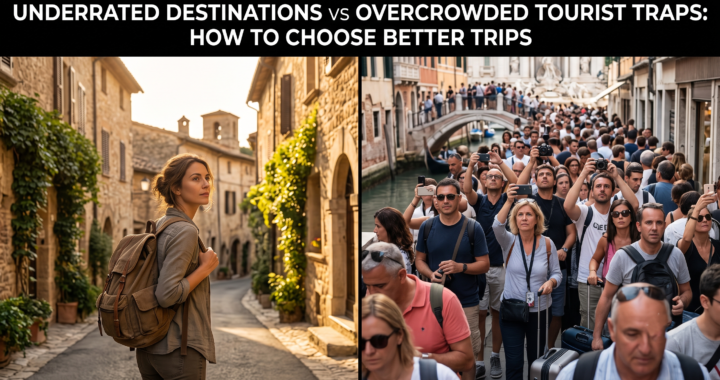














Some of the world’s most famous destinations have become victims of their own popularity — overcrowded, overpriced, and often less enjoyable than expected. Meanwhile, comparable (sometimes better) experiences exist nearby with a fraction of the crowds. Here’s how to spot the difference and choose smarter.
Signs a Destination Has Become a Tourist Trap
- Prices for food and basic services are noticeably inflated compared to areas just a short distance away.
- Most reviews mention long lines, crowd management, or “arrive early to avoid the crowds.”
- The experience is heavily mediated by staged photo spots rather than the actual place itself.
- Locals have largely moved out of the immediate area due to tourism pressure.
None of this means these places aren’t worth seeing — but it’s worth going in with realistic expectations and a plan to minimize the downsides.
How to Find Underrated Alternatives
- Look one region over. Famous destinations often have a lesser-known neighbor with similar scenery, culture, or history and far fewer visitors.
- Check shoulder-season timing for famous spots — visiting a well-known place outside peak months can itself solve the overcrowding problem.
- Search travel forums for “instead of X” — many experienced travelers actively compile alternative recommendations to popular spots.
- Pay attention to where locals actually travel domestically — often a strong signal of a genuinely great, less commercialized destination.
A Few Example Swaps (General Patterns, Not Exhaustive)
- Overcrowded coastal hotspots often have quieter towns nearby with similar beaches and much lower costs.
- Famous historic city centers frequently have smaller cities in the same country with comparable architecture and history, minus the crowds.
- Iconic natural landmarks often have less-publicized parks or trails nearby offering similar scenery with far fewer visitors.
Why This Matters Beyond Just Avoiding Crowds
Overtourism doesn’t just affect visitor experience — it strains local infrastructure, drives up costs for residents, and can degrade the natural or cultural sites themselves over time. Choosing underrated destinations, when reasonable, spreads tourism impact more sustainably.
How to Evaluate If It’s Worth the Detour
Ask honestly:
- Is the famous spot iconic enough that missing it would be a real regret? (Some places genuinely are worth the crowds.)
- Does the underrated alternative offer a comparable experience, or a meaningfully different one?
- Is the cost and time trade-off reasonable for your trip length?
Sometimes the famous spot really is worth it. The goal isn’t to avoid popular places entirely — it’s to make an informed choice rather than defaulting to whatever’s most Instagrammed.
Key Takeaways
- Watch for inflated prices, crowd-avoidance advice, and staged photo spots as tourist-trap signals.
- Look one region over, or shift timing, to find comparable underrated alternatives.
- Underrated choices often mean a better experience and a smaller impact on overtouristed areas.
