
























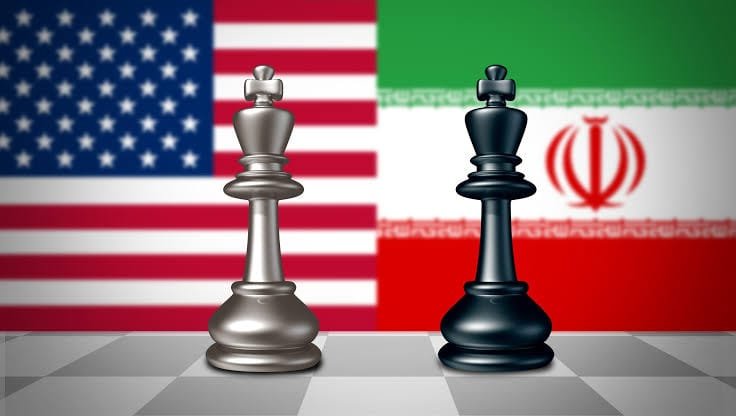
The United States and Iran appear to be dancing around the negotiating table once again, but this time the music has a decidedly tense undertone. President Donald Trump has signaled his openness to fresh diplomatic conversations with Tehran, describing ongoing exchanges as “good talks” — yet he’s made it crystal clear that military force remains very much on the table if those discussions go nowhere fast.
It’s a classic carrot-and-stick approach, and Trump is wielding both instruments with characteristic boldness. On one hand, the administration is projecting cautious optimism, suggesting that diplomatic channels are open and that progress is being made. On the other hand, Trump has been blunt in warning that if negotiations break down, the United States is fully prepared to return to what he called “doing what we were doing” — a none-too-subtle reference to military strikes that could escalate the situation dramatically.
The stakes couldn’t be higher. Key to the discussions is the Strait of Hormuz, one of the world’s most critical shipping lanes through which a significant chunk of global oil supply flows. Any disruption there would send shockwaves through energy markets worldwide, making this far more than just a regional conflict. Trump has explicitly warned that a failure to reach an agreement could trigger “strong military action,” putting enormous pressure on Iranian leadership to come to the table in good faith.
Adding another layer of complexity to an already intricate situation, Israeli Prime Minister Benjamin Netanyahu has reportedly traveled to the United States amid the ongoing tensions, signaling that America’s closest Middle Eastern ally is closely watching — and likely influencing — how Washington handles the Iran situation. Meanwhile, reports of drone activity hitting Iran’s neighboring countries suggest the broader region remains on edge.
What makes this moment particularly fascinating is the dual messaging coming out of Washington. Diplomacy and deterrence are being served simultaneously, almost like two courses at the same meal. Analysts will be watching closely to see whether Iran responds to the diplomatic overtures or calls what some might see as a bluff.
One thing is certain: the world is paying close attention. Whether this round of talks produces a meaningful agreement or simply delays an inevitable confrontation remains to be seen. The clock is ticking, and the pressure on both sides is mounting by the day.