
























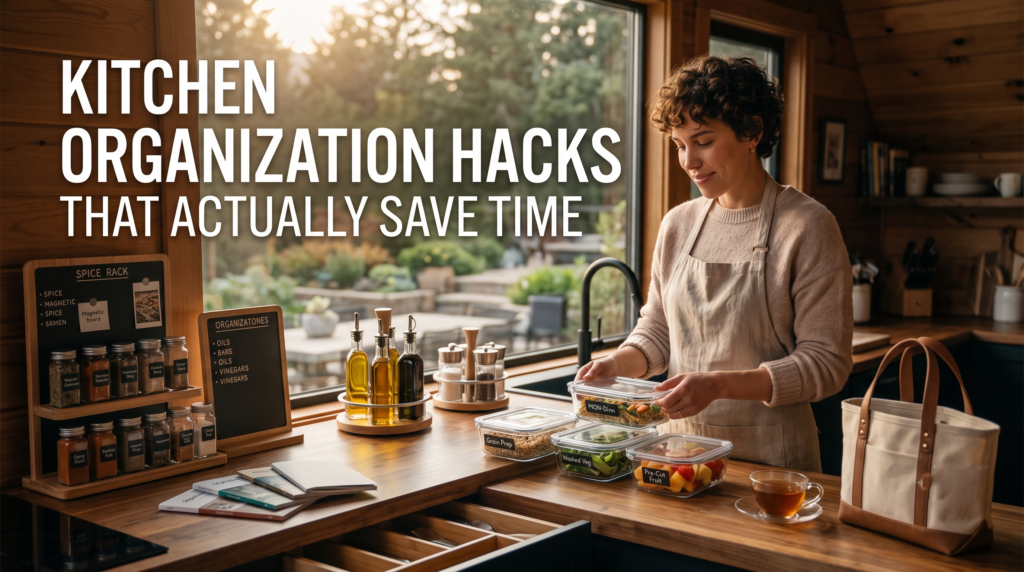
Kitchen organization content online often prioritizes how a kitchen looks over how it actually functions day to day. Here are organization changes that genuinely save time and reduce friction during cooking and cleanup — not just ones that photograph well.
Organize by Frequency of Use, Not by Category
The most common organizing mistake is grouping items purely by type (all spices together, all pots together) without considering how often each item is actually used.
- Keep daily-use items (everyday plates, go-to pan, most-used utensils) in the most accessible spots — eye level, front of cabinet.
- Move rarely used items (specialty bakeware, seasonal dishes) to harder-to-reach storage.
- This single shift reduces daily friction more than almost any other kitchen change.
Set Up Zones Around Tasks, Not Just Object Type
- Prep zone: cutting boards, knives, mixing bowls near each other and near the counter space you actually use for prep.
- Cooking zone: pots, pans, oils, and frequently used spices near the stove.
- Coffee/breakfast zone: mugs, coffee, tea, and related items grouped together near that appliance.
Zones reduce the number of steps needed for common routines, which adds up significantly over weeks of repeated use.
The Two-Minute Reset Habit
Instead of deep-cleaning the kitchen periodically, build in a 2-minute reset after each meal: wipe counters, load the dishwasher immediately, put ingredients away as you cook rather than after. This prevents the buildup that leads to overwhelming, longer cleanups later.
Container Consistency Beats Container Variety
- Standardize on a few container sizes for pantry and fridge storage rather than a mismatched collection — this makes stacking, viewing contents, and finding space far easier.
- Label anything that gets transferred out of its original packaging (especially bulk or bagged pantry items).
Fridge Organization That Reduces Waste
- Keep a visible “eat soon” zone at eye level for items nearing expiration — this alone meaningfully reduces food waste.
- Store raw meat on the bottom shelf, both for food safety and to keep it out of the way of daily-use items.
- Do a 5-minute fridge check before grocery trips to avoid duplicate purchases.
Simplify Pantry Staples
- Keep a small, visible list (on paper or phone) of pantry staples that are running low, updated as you notice them — this avoids both over-buying and last-minute grocery runs.
- Store baking and cooking staples separately if you do both often, since they’re used in different contexts.
Key Takeaways
Use an “eat soon” fridge zone to reduce food waste.
Organize by frequency of use, not just category.
Set up task-based zones (prep, cooking, coffee) to reduce steps.
Build a 2-minute reset habit after each meal instead of periodic deep cleans.
Standardize containers and label transferred pantry items.
